
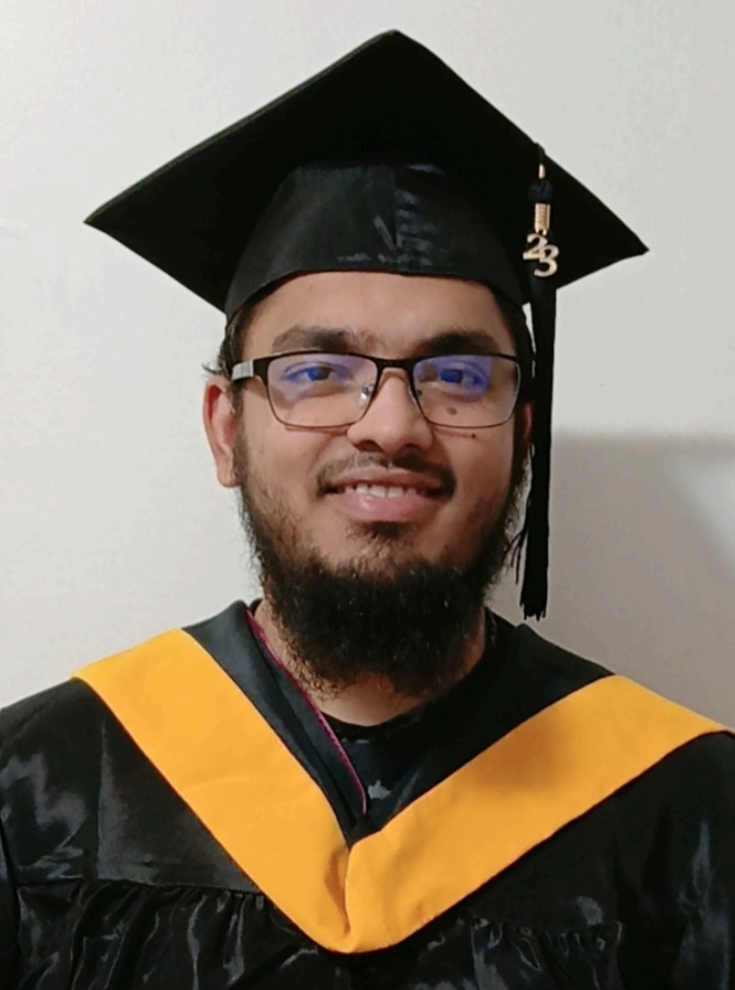
August, 2026 — In a field where most researchers choose either theory or practice, Md Fahim Ahammed has spent his career refusing to choose. A cybersecurity researcher and Senior Information Security Analyst at Sarowar Family LLC, Ahammed operates simultaneously in both worlds — publishing peer-reviewed research on the mathematical foundations of AI-driven security systems while daily implementing those systems in live enterprise environments. That dual identity, his colleagues say, is precisely what makes the work matter.
On June 12, 2026, that work received its highest international recognition yet. Ahammed has been named the recipient of the Cyber Defense and Threat Intelligence Award at the International Universal Innovator Leadership Awards 2026 — the I-UILA — an annual program organized in association with London Metropolitan University that recognizes outstanding contributions to innovation, impact, and leadership across technology disciplines. The selection process involved comprehensive screening and evaluation by an independent expert committee based on demonstrated innovation, measurable impact, scalability, and ethical practice.
“Being recognized internationally for this work is meaningful,” Ahammed said. “But what matters most is whether the research actually reaches the systems it is designed to protect. The awards and the keynotes are signals that the field thinks this work is important. The real test is what happens next.”
The award arrives alongside a keynote invitation to the Global Conference on Cloud Computing and Machine Learning, where Ahammed will address an international audience on the convergence of AI-driven security, privacy-preserving computation, and zero-trust architecture — three technical domains that together define the leading edge of how secure digital systems are designed and deployed.
Ahammed’s research spans three interconnected technical areas. The first is AI-driven adaptive security: the use of machine learning architectures — including Random Forest algorithms, Recurrent Neural Networks, and Long Short-Term Memory models — to detect threats and anomalies in real time, across environments too complex and fast-moving for traditional rule-based systems to defend. The second is privacy-preserving cryptographic computation: specifically, Secure Multi-Party Computation, a cryptographic technique that allows multiple parties to jointly analyze sensitive data without any party ever seeing the underlying data of the others. The third is zero-trust architecture: the security philosophy, now mandated across federal agencies, that no user, device, or system should be trusted by default, and that identity must be continuously verified rather than assumed after an initial login.
These are not three separate research agendas. They are, Ahammed argues, three components of a single answer to the central security challenge of the current decade: how do you build digital systems that are genuinely secure, genuinely private, and genuinely deployable in the real world at the same time?
“Most security research solves one of those three problems and accepts trade-offs on the other two,” he said. “What I am trying to build is a framework where you do not have to choose. You can verify identity continuously without surveilling the user. You can collaborate on sensitive data analysis without exposing that data. You can do this at scale, in existing infrastructure, without requiring every agency or institution to build it from scratch.”
The reach of that research has extended well beyond its origins. Ahammed holds a Master of Science in Information Assurance and Cybersecurity from Gannon University in Erie, Pennsylvania, where his graduate work focused on Secure Multi-Party Computation and AI-driven threat detection. Since completing his degree in 2023, his peer-reviewed publications have accumulated more than 100 independent citations from researchers with no institutional or co-authorship connection to him — scientists working in more than 30 countries across all six inhabited continents.
What is more striking than the citation count is the breadth of domains in which his work has been applied. Researchers affiliated with VISA U.S.A. have relied on his AI threat detection methodology to analyze cybersecurity classifier performance in financial systems. Scientists at the University of North Texas have extended his machine learning intrusion detection approach to protect telecom operator networks. A research team at Drexel University — whose laboratory is funded by the National Science Foundation and the National Institutes of Health — cited his Secure Multi-Party Computation research in establishing foundational premises for privacy-preserving healthcare data science. An assistant professor at Kean University, writing in a peer-reviewed Elsevier journal, described his SMPC work as providing “the clearest and most applicable articulation” of how cryptographic protocols can enable joint computation over sensitive datasets.
Perhaps most notably, the Netherlands Organisation for Applied Scientific Research — TNO, a government-funded body advising the Dutch Ministry of Economic Affairs and Climate — identified Ahammed’s SMPC methodology as the solution to the central institutional challenge in its 2025 white paper on cross-sector data sharing in national energy infrastructure: the reluctance of organizations to share sensitive operational data even when collaboration would produce significant public benefit. The same cryptographic approach that Ahammed developed for one application had been independently recognized as the correct answer to a completely different problem, in a completely different industry, on a different continent, by a government-funded research body.
“When researchers in the Netherlands, South Korea, Saudi Arabia, and the United States are independently building on the same methodology — not because I told them to, but because they found it useful for their own distinct problems — that tells you something about whether the underlying ideas are sound,” Ahammed said. “I find that more meaningful than any citation count.”
Independent bibliometric data supports that assessment. Analysis conducted through OpenAlex, a comprehensive academic database covering more than 240 million papers, places Ahammed in the top one percent of researchers in his field for both citation impact and research productivity for publications between 2023 and 2026. His most-cited paper, on next-generation AI and machine learning approaches to cyber threat detection, has received 67 citations — against a field average of fewer than five citations for Computer Science papers published in the same year, a ratio of more than fourteen to one.
That track record has also earned him recognition within the scholarly community as an evaluator, not just a producer, of research. He currently serves on the editorial board of a peer-reviewed cybersecurity journal. He has completed peer review assignments for the Alexandria Engineering Journal, published by Elsevier, receiving a formal Certificate of Reviewing from the journal’s editors. He was selected as a peer reviewer, session chair, and Technical Program Committee member for the 7th International Conference on Data Analytics and Management — an IEEE-sponsored conference whose proceedings are published in Springer’s Lecture Notes in Networks and Systems series, indexed in Scopus, EI Compendex, and Web of Science. He was additionally selected as an external reviewer for the 6th International Conference on Electrical, Computer, Communications and Mechatronics Engineering, whose organizers formally acknowledged that his evaluations were “essential to maintaining the academic rigor, fairness, and overall excellence of the conference.”
These appointments reflect a pattern that Dr. Rashid Ali Khan, Assistant Professor of Computer Science and Cybersecurity at Gannon University, who supervised two of Ahammed’s significant research projects, describes as genuinely unusual. “Researchers who have published peer-validated work in both AI-driven threat detection and privacy-preserving cryptographic computation, and who also have the operational security implementation experience to deploy these systems in live infrastructure — that combination is genuinely uncommon,” Dr. Khan said.
In his daily work at Sarowar Family LLC, Ahammed implements exactly the systems his research addresses: SIEM platforms for real-time security monitoring, zero-trust access controls using Azure Active Directory, endpoint protection under Microsoft Defender, and compliance frameworks including ISO 27001, SOC 2, GDPR, and HIPAA. This operational grounding is not incidental to his research — it is what allows him to design frameworks that are not only theoretically sound but immediately deployable in the regulated production environments where security decisions have real consequences.
“Most people in this field are either researchers who have never touched a production system, or practitioners who implement what other people designed,” he said. “I have always wanted to be both. The research informs the implementation. The implementation tells you where the research is wrong.”
That philosophy is reflected in his commitment to open-source release for the tools he develops. Rather than licensing frameworks to a single vendor or institution, Ahammed designs his outputs to be freely available — pre-trained models with documented interfaces that any organization can adopt and build upon without cost or proprietary restriction. The goal, he says, is to lower the barrier between published research and deployed infrastructure.
“The gap between what security research demonstrates is possible and what is actually running in production systems is enormous,” he said. “Part of my job is to close that gap. Not by building something for one customer. By building something anyone can use.”
The I-UILA Cyber Defense and Threat Intelligence Award and the keynote invitation to the Global Conference on Cloud Computing and Machine Learning are the most prominent formal recognitions of Ahammed’s work to date, but those who follow his research closely suggest they are likely not the last. His current work continues to develop the intersection of behavioral biometric authentication, cryptographic data collaboration, and adversarial resilience testing — areas that researchers across healthcare, finance, national defense, and emerging technology have already demonstrated they find useful.
For a researcher based in Buffalo, New York, whose work has already been adopted by government bodies in the Netherlands, university laboratories funded by the NSF and NIH, financial industry analysts, and scientists across Asia, Europe, Africa, South America, and Oceania, the question of what comes next is less about whether the work matters and more about where it is deployed first.
“The field is moving very fast,” Ahammed said. “The problems are real, they are documented, and the technical solutions exist. What is needed now is implementation. That is what I intend to focus on.”





Be First to Comment